Cabinet Painting › Durability & process
How Professionals Paint Kitchen Cabinets
Professionals paint kitchen cabinets by removing and labeling the doors and drawer fronts, masking the kitchen, degreasing and scuff-sanding every surface, applying a bonding primer, then spraying two coats of cabinet-grade enamel before reinstalling and adjusting the hinges. Our cabinet painting process takes 3–4 days, and an average kitchen of 20–35 doors and drawers costs $2,500–$4,500.
If you've watched a weekend DIY video, you've seen the short version: sand a little, roll on some paint. A professional job looks different mostly because of the steps nobody films. The cleaning, masking and priming decide whether the finish lasts.
This is how professionals paint kitchen cabinets, and how we do it, step by step, so you know what to expect and what to ask any painter you're considering.
Prep: doors off, labeled, kitchen protected
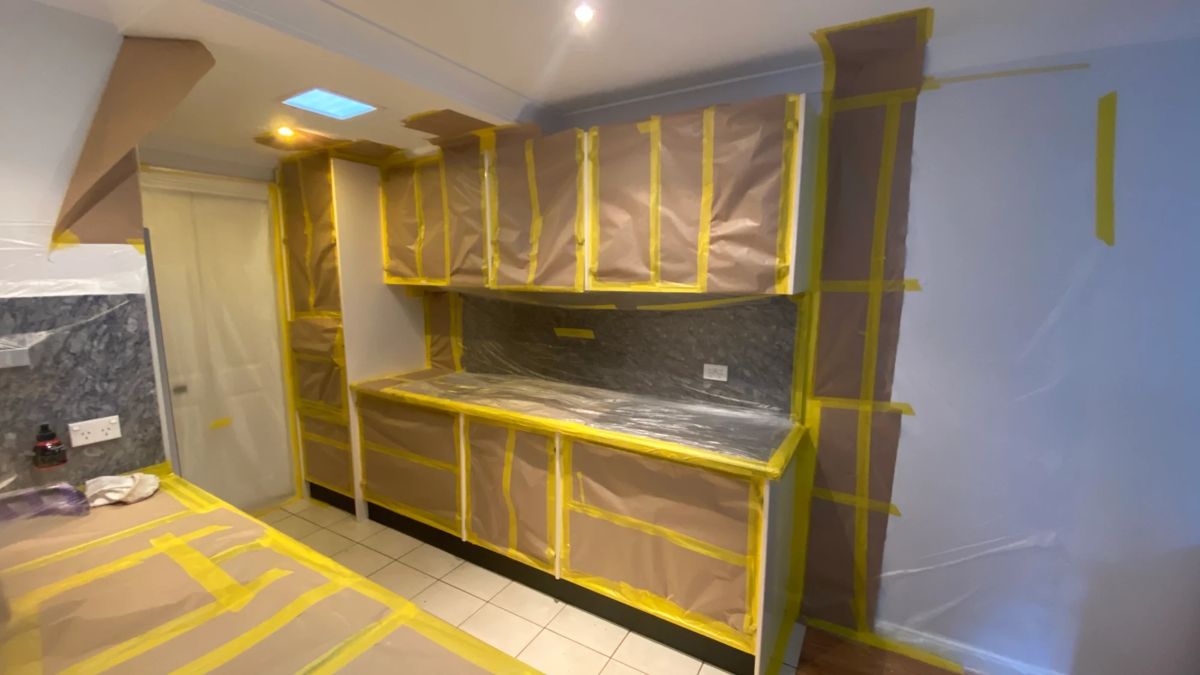
The job starts with a walkthrough. We look at the cabinet material, note any damage and confirm your color. Then the kitchen gets protected:
- Counters, floors and appliances are covered.
- Walls, backsplash and everything else near the cabinets is masked so overspray stays where it belongs.
- Doors and drawer fronts come off, and each one gets a label that matches its opening.
Labeling sounds trivial. It isn't. Doors are rarely interchangeable, hinges settle into their own positions, and a door that goes back in the wrong opening won't line up. Taking doors off also means every edge gets the same finish instead of being painted around hinges.
Ask your painter what you need to empty before the first day so the work isn't held up.
Degrease and sand
Kitchen cabinets carry a film of cooking grease and hand oil you often can't see. Paint will not bond to it. Every surface gets degreased first, frames included, with extra attention near the range, the hood and around handles.
Then everything is scuff-sanded. The goal isn't to strip the old finish. It's to dull the sheen and give the primer something to grip. On stained wood, lacquer, laminate and previously painted cabinets, this step separates a finish that lasts from one that scratches off with a fingernail.
Sanding dust is removed before anything else goes on, because dust trapped under primer shows up as grit in the final coat. This is also the stage to deal with dents or old hardware holes, so mention it early if you're changing pulls.
Get your cabinet price
$2,500–$4,500 for an average kitchen, 3–4 days, 2-year warranty. Send photos and we reply the same day.
Get a free quotePrime
Primer is where professional and DIY jobs differ most. We use a bonding primer, a type made to grip surfaces that ordinary paint slides off: stained or lacquered wood, laminate and melamine, and old paint. It also evens out the surface so the color looks the same on a door that was dark walnut and a frame that was light maple.
On woods like oak and cherry, tannins can bleed through light colors. Blocking that bleed-through matters, and we cover it in painting over stained cabinets.
Primer is never a substitute for cleaning and sanding. Even the best bonding primer fails over grease.
Spray the finish coats
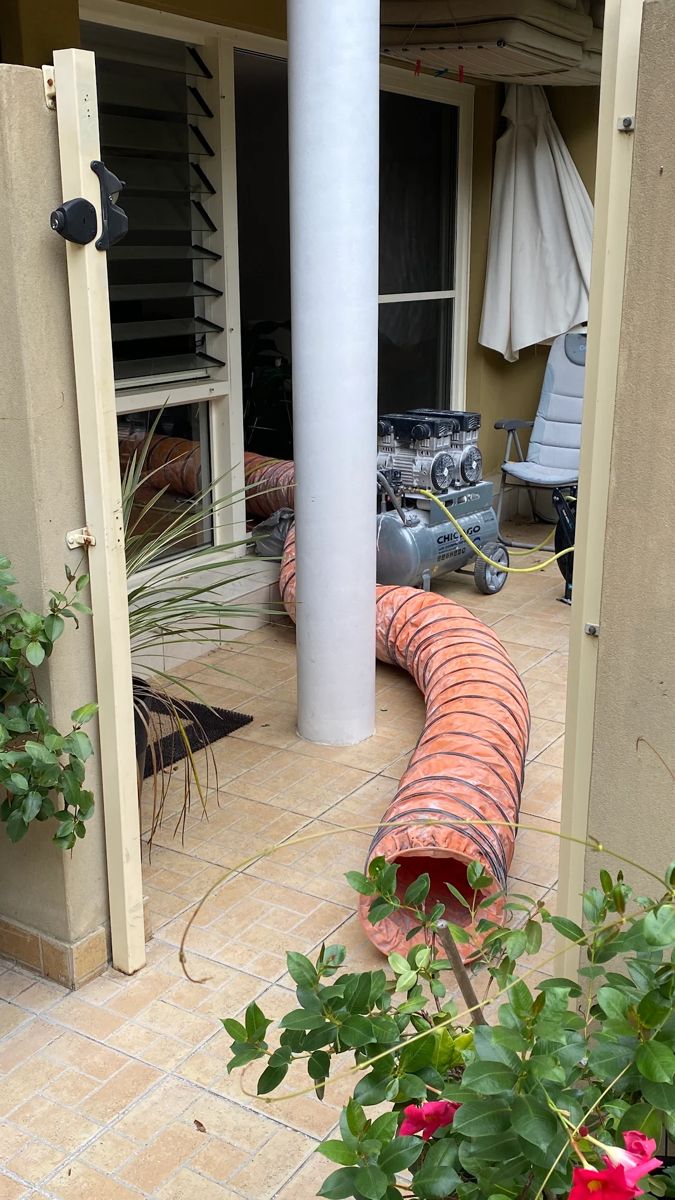
This is the step most people picture when they ask how professionals paint kitchen cabinets. The color goes on in two sprayed coats of a cabinet-grade enamel. Spraying lays down a thin, even film with no brush marks or roller texture, which is the factory look most people want from painted cabinets. Because the doors are off, both faces and every edge get covered, and the frames are sprayed in place inside the masked kitchen.
Two coats give full, even color and enough film to stand up to daily use. One heavy coat is not the same thing. It can sag at edges and takes longer to harden.
If you're wondering whether a brush can match this, see spraying vs brushing kitchen cabinets.
Cure and reinstall
Once the finish is dry enough to handle, doors and drawer fronts go back on their labeled openings. Hinges are adjusted so gaps are even and doors close flush. Masking comes off, and we do a care walkthrough with you covering how to clean the new finish and what to avoid in the first weeks.
Dry isn't the same as cured. Cabinet enamel keeps hardening for several weeks, so treat it gently at first. The whole job takes 3–4 days, and this day-by-day timeline shows what each day looks like. Our cabinet painting comes with a 2-year warranty. For prices and the cities we cover, see kitchen cabinet painting.
Common questions
Do professionals remove cabinet doors to paint them?
Yes. Doors and drawer fronts come off and are labeled so every edge gets finished and each piece goes back in its own opening.
Do you have to sand cabinets before painting?
Yes, at least a scuff-sand. It dulls the old finish so the primer can grip, and skipping it is a common reason paint scratches off.
Do professionals spray or brush kitchen cabinets?
Most professionals spray the finish coats because spraying leaves a smooth, even surface with no brush marks.
How much does professional cabinet painting cost?
Small kitchens under 20 doors and drawers start from $2,000, average kitchens run $2,500–$4,500, and large kitchens with 35 or more pieces are $4,500 and up.